
Vegan fried rice made in a rice cooker is a practical way to achieve the flavor and texture of classic fried rice without using a stove or eggs. The rice cooker handles the steaming and gentle sautéing phases on its own, creating a dish that is savory, satisfying, and surprisingly close to traditional pan-fried versions. This approach is ideal when you want a convenient, plant-based version that still delivers warmth, crunch, and balanced seasoning, similar to other savory dishes like vegan garlic butter rice in a rice cooker that rely on the same hands-off method. You can also discover more ideas like this in the main Rice Cooker Recipes collection.
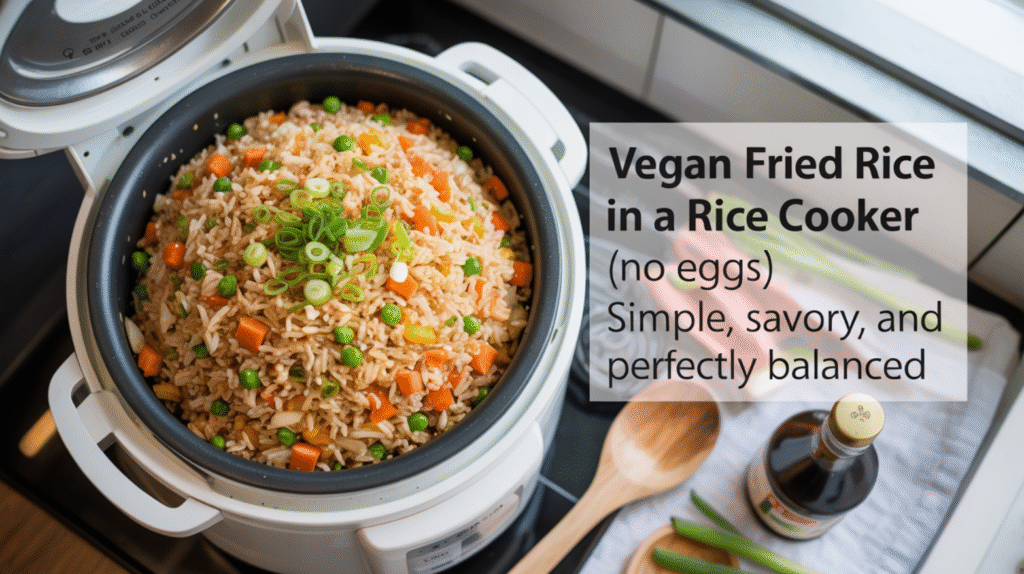
This guide explains how to prepare the rice correctly, how vegetables behave in a rice cooker’s controlled heat, and how to build flavor without relying on eggs or oil-heavy frying techniques. The same core principles of rice texture and moisture control show up in recipes like making quinoa in a rice cooker, where the grain’s structure depends on even, gentle heat.
Why Rice Cooker Fried Rice Works Without Stir-Frying
The rice cooker uses steady, indirect heat, which helps ingredients soften gradually while allowing flavors to blend cleanly. Even without the high heat of a wok, the dish becomes aromatic and cohesive.
Love making easy rice cooker meals like this one? Explore our guide to the Best Rice Cookers for Healthy, Plant-Based & Everyday Meals.
How the Texture Comes Together
The rice needs to be slightly dry before cooking so it doesn’t turn mushy.
- Cold or day-old rice separates easily
- Vegetables retain a soft but defined bite
How Flavor Develops in a Closed Cooker
The sealed environment traps steam and seasoning.
- Soy sauce and aromatics coat the grains evenly
- Vegetables release mild sweetness as they cook
Essential Ingredients for Vegan Rice Cooker Fried Rice
All ingredients remain fully plant-based while still achieving the savory depth expected from fried rice. Many of the same pantry staples are also used in simple sides like coconut jasmine rice, which pairs well with this dish.
Base Components
These form the structure of the dish.
- Cooked and cooled rice
- Neutral oil or a splash of vegetable broth
Vegetable Mix
A balanced mix of textures adds color and nutrition.
- Carrots, peas, corn, and spring onions
- Bell pepper or cabbage for variety
Flavor Builders
These ingredients recreate the savory character of fried rice and echo some of the bright, layered flavors used in dishes like vegan cilantro lime rice.
- Soy sauce or tamari
- Garlic, ginger, and optional sesame oil
How to Make Vegan Fried Rice in a Rice Cooker
This method relies on layering, timing, and the rice cooker’s gentle steam cycle.
Step 1: Prepare the Rice
Use chilled rice for best results.
- Spread fresh rice to cool if needed
- Break up clumps before adding to the cooker
Step 2: Add Vegetables and Aromatics
Place vegetables on top of the rice.
- Garlic and ginger should be finely chopped
- Frozen vegetables go in directly
Step 3: Add Seasonings
Pour soy sauce, tamari, or coconut aminos over the mixture.
- Add a small amount of oil for flavor
- A pinch of salt enhances the savoriness
Step 4: Select the Cooking Mode
Choose the “Cook” or “Quick Cook” setting.
- Keep the lid closed
- Let the steam distribute heat evenly
Step 5: Stir and Rest
Once the cooker switches off, stir thoroughly.
- Resting improves the grain separation
- Adjust seasoning before serving
Vegan Add-Ins That Enhance Fried Rice
Plant-based ingredients can add richness without eggs or dairy.
Protein Options
These increase the meal’s heartiness.
- Tofu cubes, lightly seasoned
- Edamame for extra protein
Texture Enhancers
These create a satisfying bite.
- Roasted peanuts or cashews
- Lightly sautéed mushrooms
How to Build Savory Depth Without Eggs
Fried rice traditionally uses eggs for richness, but plant-based alternatives can achieve similar satisfaction.
Flavor Substitutes
Ingredients that mimic the umami of eggs.
- Nutritional yeast for mild richness
- A dash of miso paste blended into the seasoning
Texture Substitutes
Ingredients that give body without scrambling.
- Soft tofu gently folded in after cooking
- Finely crumbled firm tofu seasoned with turmeric
Tips for Preventing Soggy Fried Rice in a Rice Cooker
Maintaining grain separation is key to achieving the correct texture. The same idea appears in other rice-based dishes like vegan turmeric rice, where the grains need to stay distinct even while absorbing flavorful liquid.
Avoid Using Warm or Freshly Cooked Rice
Fresh rice contains too much moisture.
- Cool rice completely before use
- Refrigerate for at least one hour
Don’t Add Excess Liquid
Too much soy sauce can soften the grains.
- Use small amounts first
- Add more only after cooking
Serving and Storage Suggestions
Vegan fried rice works well as a standalone meal or a versatile side dish.
Serving Ideas
Add toppings for a more complete dish.
- Spring onions for freshness
- Red pepper flakes for heat
Storage
The dish keeps well for quick meals.
- Refrigerate for up to three days
- Add a splash of water when reheating
FAQs
Here are some questions and answers about making vegan fried rice in a rice cooker.
Can I make this recipe with brown rice?
Yes, but brown rice needs a longer cook time and should be chilled before use. It will produce a firmer texture compared to white rice.
Can I cook the rice and vegetables at the same time?
It’s possible, but the texture is better when rice is cooked first, cooled, and then used in the fried rice recipe. This prevents sogginess.
Do I need oil to make vegan fried rice?
Oil adds flavor and helps prevent sticking, but you can use vegetable broth for a fully oil-free version. The rice cooker’s steam will still create a cohesive dish.
Can I add sauces like sriracha or vegan oyster sauce?
Yes, but add them after cooking to avoid overpowering the dish. Stir them in before serving for best flavor control.
Will the rice cooker burn the vegetables?
No, the cooker uses moist heat, so vegetables soften gently. Stirring after cooking helps distribute them evenly.