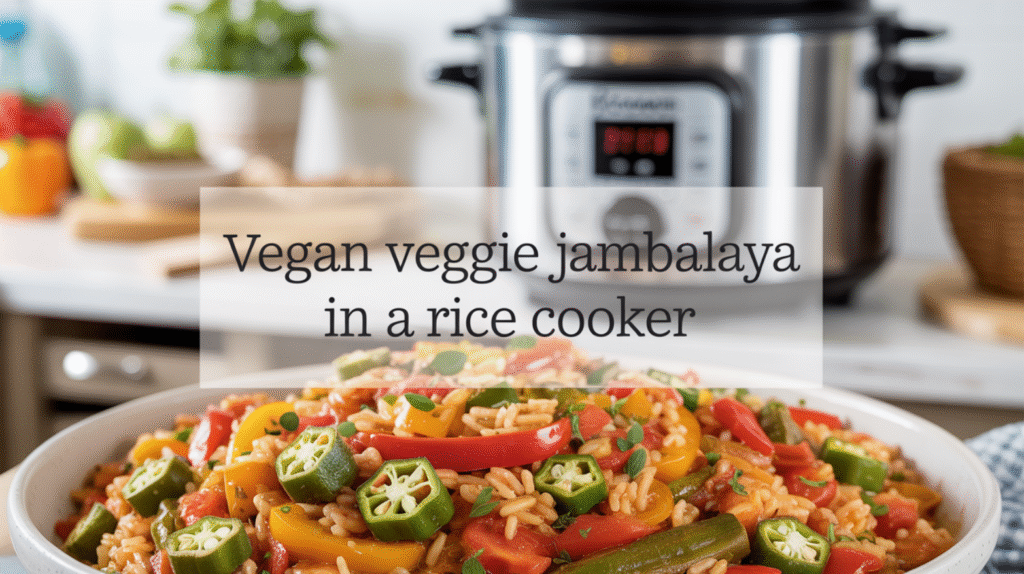
Vegan veggie jambalaya becomes incredibly simple when made in a rice cooker. Instead of simmering everything on the stove for nearly an hour, the rice cooker handles the slow, even heat that jambalaya needs to become thick, bold, and full of flavor. The vegetables soften gently, the spices deepen, and the rice absorbs every bit of broth, leaving you with a dish that is hearty, smoky, and satisfying without any meat. If you enjoy this kind of cozy, spice-forward bowl, you might also like our vegan rice cooker chili.
This recipe works especially well on busy days because you can prepare the ingredients, load the cooker, and let it handle the long, steady cooking that jambalaya is known for. It’s the same hands-off convenience that makes recipes like our rice cooker chickpea stew so practical for weeknights.
What Makes Rice Cooker Jambalaya Work So Well
Jambalaya depends on slow heat and moisture absorption. A rice cooker provides both, allowing the vegetables and aromatics to become sweet and tender while the rice soaks up the spices and tomato base. The same slow absorption is what makes dishes like our vegan Spanish rice with black beans turn out so flavorful.
Love making easy rice cooker meals like this one? Explore our guide to the Best Rice Cookers for Healthy, Plant-Based & Everyday Meals.
Slow, Even Cooking
The rice cooker mimics the “low simmer” needed for jambalaya.
- Rice absorbs the tomato broth gradually
- Vegetables soften evenly without burning
- Spices bloom properly, giving the dish deeper flavor
One-Pot Convenience
Because everything cooks in one place:
- No need to sauté separately
- Easy cleanup
- Perfect consistency with very little attention
Ingredients for Vegan Veggie Jambalaya
This version relies entirely on vegetables, warming spices, and rice to create the familiar jambalaya texture and taste.
Base Ingredients
These form the structure of the dish.
- Long-grain white rice
- Vegetable broth
- Crushed or diced tomatoes
Aromatics and Vegetables
These ingredients build depth and give jambalaya its identity.
- Onion, finely chopped
- Green or red bell pepper
- Celery
- Garlic
Additional Vegetables
You can include extra veggies for color and texture. Mushroom lovers may also enjoy the silky texture of our creamy vegan mushroom risotto, which uses rice cooker steam in a similar way.
- Zucchini
- Mushrooms
- Peas or corn
- Diced carrots
Seasonings and Flavor Essentials
These spices recreate the authentic jambalaya flavor.
- Paprika
- Cayenne pepper (optional for heat)
- Smoked paprika for a smoky note
- Dried thyme
- Dried oregano
- Black pepper
- Bay leaf
How to Make Vegan Jambalaya in a Rice Cooker
Jambalaya has a layered flavor, but the steps stay simple when using a rice cooker. The “add everything and let it cook” style is similar to other one-pot recipes like our vegan lentil curry in a rice cooker, where the cooker handles most of the work.
Step 1: Rinse and Add the Rice
Rinsing removes excess starch and prevents gumminess.
- Rinse until water is mostly clear
- Add rice to the cooker pot
Step 2: Add Tomatoes and Broth
These liquids form the rich base.
- Add crushed or diced tomatoes
- Pour in vegetable broth based on your rice cooker’s ratio
Step 3: Add All the Chopped Vegetables
Everything cooks together, so even firm veggies soften beautifully.
- Add onions, celery, bell peppers, garlic
- Add optional veggies like mushrooms or peas
Step 4: Add the Spices
Proper seasoning is essential for jambalaya.
- Add paprika, smoked paprika, thyme, oregano, pepper
- Add cayenne if you want heat
- Place a bay leaf on top (remove before serving)
Step 5: Cook on the Regular Rice Setting
Jambalaya needs enough time for the tomatoes and broth to absorb fully.
- Use the standard “Cook” or “White Rice” mode
- Allow the cooker to complete one full cycle
Step 6: Rest and Fluff
Resting helps the rice firm up and settle.
- Let it sit for 5 minutes
- Remove bay leaf
- Fluff gently
Flavor Variations for Vegan Jambalaya
You can easily customize the dish by changing spices or adding plant-based proteins. For example, if you like rice bowls with more focus on protein, you might enjoy our rice cooker tofu rice bowl as a companion recipe.
Smoky Cajun Style
Enhances the Southern flavor profile.
- Increase smoked paprika
- Add a splash of hot sauce when serving
High-Protein Plant-Based Jambalaya
Boosts nutrition and texture.
- Add cooked chickpeas
- Stir in diced vegan sausage after cooking
Common Mistakes to Avoid
These small adjustments help keep the texture perfect.
Using Too Much Tomato
Too much tomato can make the rice overly sticky.
- Balance tomato with broth
- Keep the ratio close to your rice cooker’s liquid requirements
Adding Raw Vegan Sausage Early
It may break apart during cooking.
- Add vegan sausage after cooking, during fluffing
Health Benefits of Vegan Veggie Jambalaya
This dish is rich, warming, and naturally nutritious.
Packed with Vegetables
Provides fiber, vitamins, and minerals.
- Supports digestion
- Adds natural sweetness and depth to the dish
Lower in Fat Than Traditional Versions
Plant-based versions skip the heavy meats.
- Less saturated fat
- Still hearty and filling
Serving Suggestions
Jambalaya is easy to serve on its own, but toppings and sides add extra flavor. For another comforting oven-style or casserole-style rice idea, you might also like our vegan potato rice casserole, which pairs well with this jambalaya in a weekly meal plan.
With Fresh Herbs
Brightens the rich flavors.
- Chopped parsley or green onions
As a Meal Prep Option
Stores well without losing texture.
- Refrigerate in containers
- Add a splash of broth when reheating if needed
FAQs
Does jambalaya work with brown rice?
Yes, but brown rice needs more liquid and a longer cook time. Follow the rice cooker’s brown rice instructions.
Can I make it spicier?
Absolutely. Add more cayenne, hot sauce, or sliced jalapeños after cooking.
Does the dish dry out as it cools?
Sometimes. A splash of warm vegetable broth fixes the texture instantly.
Can I freeze jambalaya?
Yes. It freezes well for up to two months. Add a little broth when reheating.