Rice cooker Japanese curry rice is a soothing vegan meal built around tender vegetables, gently spiced curry sauce, and fluffy rice cooked with minimal effort. Instead of standing at the stove, the rice cooker allows the curry flavors to develop slowly while the rice absorbs warmth and aroma evenly. The result is a thick, velvety curry with balanced sweetness and spice, served over perfectly cooked rice, very similar in comfort to other one-pot dishes like rice cooker tofu teriyaki rice or vegan Thai green curry rice.
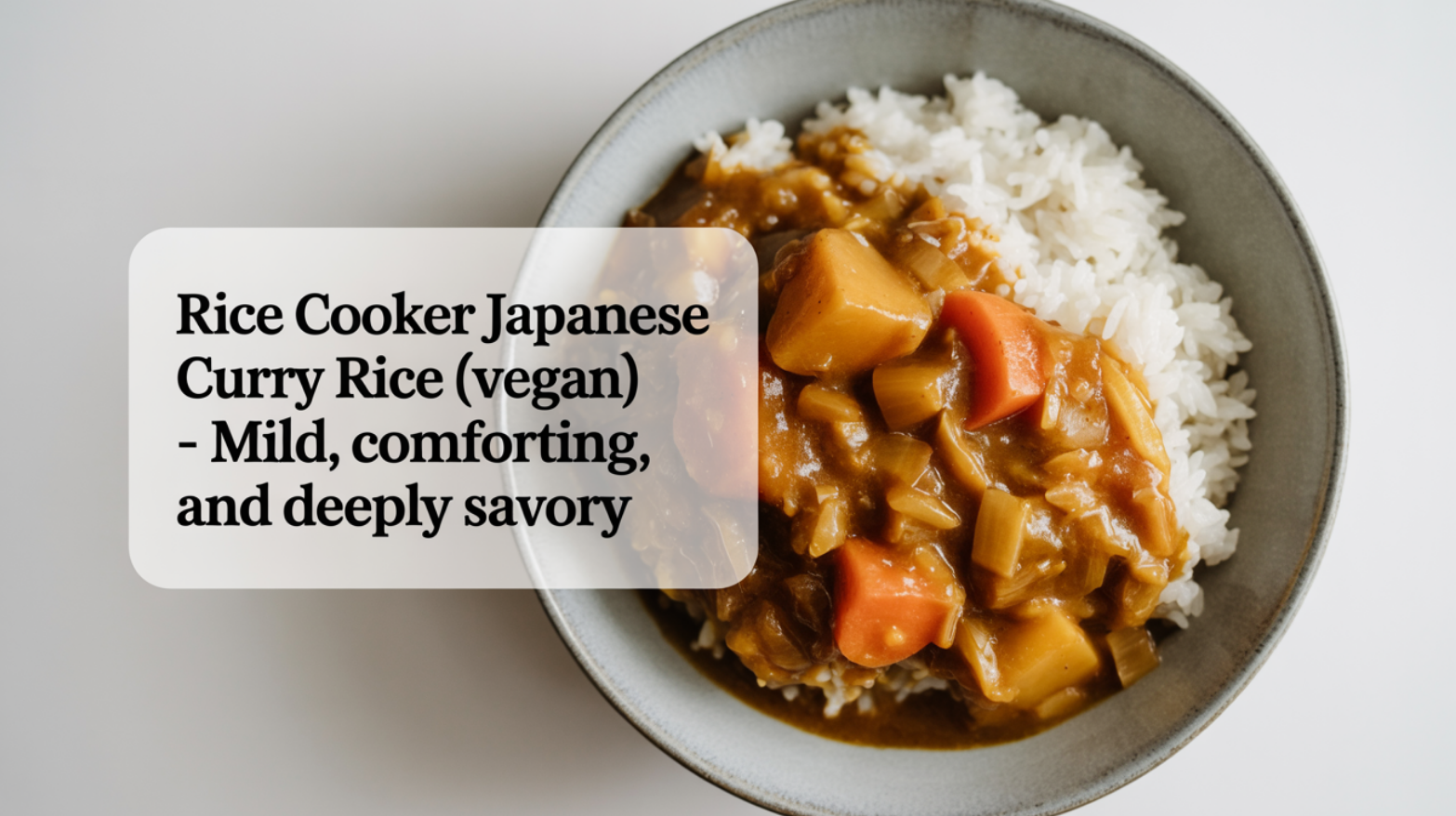
This dish is ideal for weeknight dinners, meal prep, or anyone seeking a comforting plant-based version of a Japanese classic, especially if you already enjoy rice-based meals like rice cooker tofu rice bowls.
Why Japanese Curry Works Well in a Rice Cooker
Japanese curry is naturally suited to low, steady heat, which makes the rice cooker an excellent tool. The same gentle cooking style is what makes recipes like rice cooker miso mushroom rice turn out savory and deeply flavored without constant stirring.
Love making easy rice cooker meals like this one? Explore our guide to the Best Rice Cookers for Healthy, Plant-Based & Everyday Meals.
Gentle Heat Enhances Flavor
Japanese curry relies on gradual flavor building rather than sharp heat.
- Spices mellow and blend smoothly
- Vegetables soften without breaking down
Even Cooking Without Stirring
The rice cooker maintains consistent temperature.
- Prevents scorching at the base
- Allows sauce to thicken naturally
Ingredients for Vegan Japanese Curry Rice
Each ingredient contributes to the curry’s signature depth and comfort.
Core Components
These form the foundation of the dish.
- Japanese short- or medium-grain rice
- Water or vegetable broth
If you’re still choosing a machine, you can look at our guide to the best rice cookers to find a model that handles curry and other one-pot meals reliably.
Curry Base
This defines the flavor profile.
- Vegan Japanese curry roux cubes or paste
- Onion, garlic, and ginger
Vegetables
These add body, texture, and sweetness.
- Potatoes or sweet potatoes
- Carrots
- Peas or green beans
Optional Enhancements
These deepen flavor without overpowering.
- Soy sauce or tamari
- Grated apple or a touch of maple syrup
Understanding Japanese Curry Flavor
Japanese curry differs from other curries in balance and texture.
Mild and Slightly Sweet
The spice level is gentle and rounded.
- Less heat than Indian curries
- Subtle sweetness supports savory notes
Thick, Stew-Like Consistency
The sauce is designed to coat rice.
- Roux thickens gradually
- Creates a glossy, rich finish
How to Make Vegan Japanese Curry Rice in a Rice Cooker
This approach allows curry and rice to work together without crowding flavors, similar to how layered cooking is used in recipes like rice cooker ratatouille-style rice.
Step 1: Rinse and Start the Rice
Begin with properly prepared rice.
- Rinse until water is mostly clear
- Add measured water or broth
If your rice cooker has separate compartments, cook rice separately. Otherwise, the curry can be prepared first and served over rice.
Step 2: Prepare the Vegetables
Cut vegetables into evenly sized pieces.
- Ensures uniform cooking
- Prevents some vegetables from turning mushy
Step 3: Add Vegetables and Liquid
Layer vegetables above the rice or cook curry separately in the cooker.
- Use just enough liquid to cover vegetables
- Avoid excess water to prevent thin sauce
Step 4: Cook Until Tender
Select the standard “Cook” setting.
- Vegetables soften gradually
- Flavors begin to merge
Step 5: Add Curry Roux
Curry roux is added near the end.
- Break into pieces and stir gently
- Allow sauce to thicken as it rests
Tips for Perfect Curry Texture
Simple adjustments help maintain balance.
Control Thickness Carefully
Japanese curry thickens as it rests.
- Avoid adding too much liquid early
- Adjust with small splashes at the end only
Let the Curry Rest
Resting improves body and flavor.
- Allows starches to settle
- Creates smoother texture
Vegetable Variations to Try
This curry adapts easily to seasonal produce.
Classic Additions
These follow traditional profiles.
- Potatoes and carrots
- Onion-heavy base
Lighter, Modern Versions
These feel fresher and less heavy, especially when served alongside brighter dishes like vegan kimchi fried rice or vegan sushi rice.
- Zucchini or mushrooms
- Spinach added at the end
Common Mistakes to Avoid
Avoiding these preserves texture and depth.
Adding Roux Too Early
Roux thickens quickly.
- Can burn if overcooked
- Always add after vegetables are tender
Overmixing the Rice
Stirring rice aggressively releases starch.
- Fold gently if combining
- Serve curry over rice for best texture
Serving Ideas for Japanese Curry Rice
This dish can feel simple or elevated depending on presentation.
Traditional Bowl Style
Serve curry ladled over rice.
- Rice shaped neatly beside curry
- Garnish with scallions
Bowl-Meal Variations
Add toppings for a complete meal, or pair with a lighter side such as vegan sticky rice with mango for a sweet contrast.
- Baked tofu or chickpeas
- Pickled vegetables for contrast
Storage and Reheating Tips
Japanese curry stores particularly well.
Refrigeration
Cool completely before storing.
- Curry thickens further overnight
- Keeps up to four days
Reheating
Warm slowly.
- Add small amounts of water or broth
- Stir gently to restore consistency
Health and Nutritional Context
This curry balances comfort with nourishment.
Plant-Based and Filling
Vegetables and rice provide steady energy.
- Naturally cholesterol-free
- Easy to digest
Flavor Without Excess Oil
Japanese curry delivers richness efficiently, in the same way dishes like creamy vegan mushroom risotto feel indulgent without being heavy.
- Small amounts of fat go far
- Spices create satisfaction without heaviness
FAQs
Here are some questions and answers about vegan Japanese curry rice made in a rice cooker:
Can I use store-bought curry roux?
Yes, as long as it is labeled vegan. Many Japanese curry blocks contain dairy or animal fat, so check ingredients carefully.
Can this be made less sweet?
Yes. Skip apple or sweeteners and use more savory vegetables like mushrooms.
Is this curry spicy?
Japanese curry is typically mild. You can adjust heat by choosing mild or spicy curry blocks.
Can I use brown rice?
Yes, but cooking times and liquid ratios differ. Use your rice cooker’s brown rice setting if available.
Does the curry thicken more after cooling?
Yes. Japanese curry naturally thickens as it rests, especially after refrigeration.