Affiliate Disclosure: RiceCookers.blog is a participant in the Amazon Services LLC Associates Program. As an Amazon Associate, we earn from qualifying purchases made through links on this page. This comes at no extra cost to you.
Vegan cooking isn’t only about white rice. It’s about brown rice, quinoa, lentils, oatmeal, steamed vegetables, and one-pot meals you can repeat all week without thinking too hard. A rice cooker sits right in the middle of that routine, because it handles the daily staples that make plant-based eating feel easy.
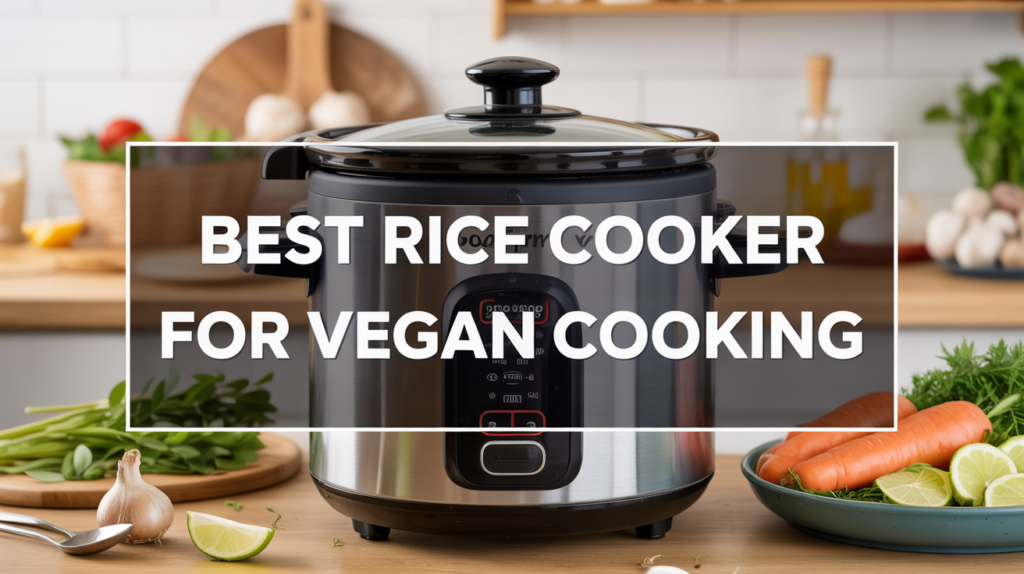
The best rice cooker for vegan cooking is the one that does three things consistently: cooks whole grains evenly, handles thicker foods like oats and lentils without turning them into mush, and stays simple to clean after sticky starches. If it also uses materials you feel good about using every day, even better.
This guide shows you how to choose the right one, how to compare models in a way that actually matters for vegan meals, and which types of rice cookers tend to work best for different plant-based lifestyles.
What makes a rice cooker “great” for vegan cooking?
A lot of “best rice cooker” lists focus on brand hype, but vegan cooking has its own reality. Plant-based meals usually involve more whole grains, more starchy foods, and more batch cooking. That changes what matters.
Here’s what actually moves the needle:
1) Whole grains should cook evenly, not “half chewy, half mushy”
Brown rice is the easiest way to spot a weak cooker. A strong model gives you consistent texture without babysitting or extra stirring.
2) Thick foods shouldn’t scorch on the bottom
Oatmeal, porridge, and congee-style bowls can burn fast in some cookers. A good vegan-friendly cooker handles thicker textures smoothly and lets you finish with something creamy, not crusty.
3) Lentils and legumes should stay intact
Many vegans cook lentils regularly. The best rice cookers for vegan cooking can handle lentils in a way that keeps them tender, not broken down, and avoids burnt corners.
4) Cleanup should feel fast, not annoying
Sticky rice, oats, and starchy grains leave residue. The goal is a pot that wipes clean without scraping or frustration.
5) Warm mode should keep food pleasant, not dried out
A good warm setting keeps rice fluffy and meals ready later. A weak warm setting turns food stiff or crusty if it sits too long.
Inner pot materials: what vegan cooks usually care about
Many plant-based cooks choose their kitchen gear with a “daily use” mindset. If you’re cooking grains constantly, the inner pot material becomes part of your routine.
Stainless steel inner pots
Why people love them: durable, long-lasting, and no coating to wear off.
What to watch: rice can stick more easily if you don’t rinse well, measure water carefully, or let rice rest after cooking.
Best for: cooks who prioritize durability and don’t mind dialing in technique once.
Nonstick inner pots
Why people love them: easiest cleanup and least sticking.
What to watch: coatings can scratch over time, and many health-focused cooks prefer to avoid them if possible.
Best for: people who want the smoothest daily workflow and quick cleanup.
Ceramic-coated inner pots
Why people love them: often chosen as a middle ground, easier cleanup than stainless, and often preferred by people who dislike traditional nonstick coatings.
What to watch: “ceramic” varies a lot by brand, and some ceramic coatings can wear if treated roughly.
Best for: cooks who want easier cleanup while leaning toward “kitchen peace of mind.”
Simple rule:
If you want lowest hassle, nonstick is usually easiest. If you want maximum durability, stainless steel wins. If you want a comfort middle ground, ceramic-coated can make sense.
The “vegan staples test” (how to judge any rice cooker in minutes)
When you’re comparing models later, use this checklist. It’s more useful than most “top 10” reviews.
Test 1: Brown rice consistency
- Does it come out evenly cooked?
- Does it stay fluffy after resting?
- Does the bottom stay clean or scorch?
Test 2: Quinoa texture
- Does it separate cleanly?
- Does it stay light, not wet and clumpy?
Test 3: Oatmeal / porridge behavior
- Does it boil over?
- Does it burn at the bottom?
- Does it finish creamy?
Test 4: Lentils
- Do they cook through without turning to paste?
- Does the cooker avoid burnt edges?
Test 5: Steaming while grains cook
- Does the steamer basket feel practical?
- Are vegetables bright and tender instead of soggy?
Test 6: Cleanup after sticky starches
- Can you wipe it clean easily?
- Do you need scraping or soaking?
If a cooker performs well on these, it will feel like it was made for plant-based meals.
The best rice cooker “type” for each vegan cooking style
Instead of pushing random models, match the cooker style to your lifestyle. This is where most competitors miss the point.
If you do vegan meal prep (grain bowls, batch cooking, weekly lunches)
You want:
- dependable multi-grain results
- a warm mode that doesn’t dry food out
- an inner pot that cleans quickly
If you’re focused on a “non-toxic kitchen” feel
You want:
- a stainless steel or high-quality ceramic-coated inner pot
- strong performance without relying on coatings
- durable build for daily use
If you cook a lot of brown rice and whole grains
You want:
- steady heat control
- predictable water handling
- multi-grain consistency
If oats, porridge, and congee bowls are part of your routine
You want:
- a true porridge setting or thick-food performance
- a design that reduces scorching and boil-over
- smooth consistency without constant stirring
If lentils and plant-based protein meals are a big part of your diet
You want:
- reliable simmer-like performance
- even cooking without burning
- a pot that handles thicker, hearty textures
If you love steamed vegetables with every meal
You want:
- a steamer basket that actually fits enough food
- good steam circulation
- the ability to steam while grains cook
If you’re cooking for one (or want a compact secondary cooker)
You want:
- small capacity that still cooks evenly
- fast cleanup
- no wasted space on your counter
What to look for before you buy
- Multi-grain or brown rice setting (helps with whole grains)
- Porridge setting (if you cook oats often)
- Steaming setup (if vegetables are part of your daily meals)
- Keep warm behavior (should hold texture, not dry it out)
- Delay timer (helpful for meal prep and busy mornings)
- Inner pot that matches your preference (stainless, nonstick, ceramic-coated)
- Easy-to-clean lid and steam vent (small detail, huge daily difference)
FAQs
What size rice cooker is best for vegan cooking?
If you meal prep, a medium-to-large cooker is usually easier because you can cook grains for multiple meals at once. If you cook for one, a compact model keeps things simple and avoids leftovers you don’t want.
Can a rice cooker cook lentils?
Yes, many can. The best results usually come from models that handle thicker foods well and cook evenly without scorching. Lentils should come out tender and intact, not broken down and sticky.
Can I steam vegetables in a rice cooker?
Yes, if your model includes a steamer basket. It’s one of the easiest ways to add vegetables to a plant-based meal without extra pans.
Is a nonstick inner pot “bad”?
Nonstick is popular because it’s convenient and cleans quickly. Some cooks prefer to avoid coatings for personal comfort or long-term kitchen choices, while others love the ease. If you choose nonstick, treat the pot gently and avoid scratching.
Why does brown rice fail in some rice cookers?
Brown rice is less forgiving than white rice. It needs consistent heat and reliable hydration. Weaker cookers can leave it chewy, uneven, or scorched at the bottom.
What’s the easiest rice cooker style for everyday vegan meals?
A model that handles multi-grain well, stays easy to clean, and keeps food warm without drying it out tends to be the most “set it and forget it” option for plant-based routines.
Final verdict: which rice cooker is best for vegan cooking?
The best rice cooker for vegan cooking isn’t the one with the longest feature list. It’s the one that supports the food you actually cook: whole grains, lentils, oats, vegetables, and easy one-pot meals.
If you want the simplest path, choose a cooker that’s dependable with brown rice, comfortable with thicker foods, and easy to clean after sticky starches. Then match the inner pot material to your comfort level, because vegan cooking is often daily cooking, and daily cooking should feel easy.