
Coconut jasmine rice delivers a soft, aromatic, and lightly creamy texture that forms the perfect base for plant-based meals. As jasmine rice absorbs coconut milk slowly in a rice cooker, it develops a subtle sweetness and a silky finish without becoming heavy. This recipe shows how to balance the creaminess of coconut milk with the floral fragrance of jasmine rice, ensuring tender grains that stay separate rather than mushy. If you enjoy simple, vegan mains and sides like this, you can find more ideas in the Rice Cooker Recipes collection.
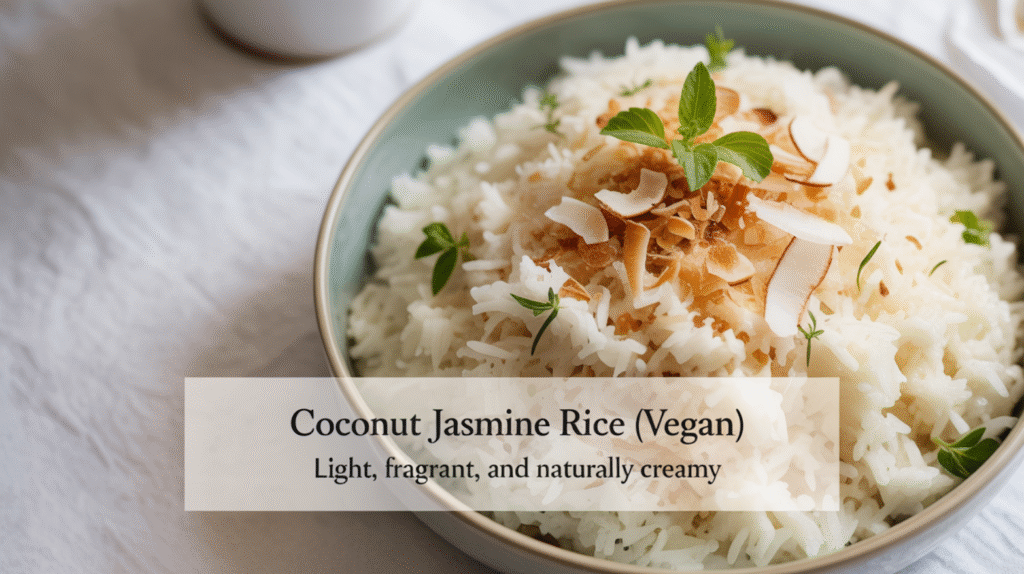
Coconut jasmine rice works beautifully with curries, stir-fries, roasted vegetables, and tropical bowls, making it one of the most versatile vegan sides you can prepare with almost no effort. It fits perfectly alongside other rice cooker staples such as vegan fried rice or the bright and zesty cilantro lime rice.
Why Coconut Jasmine Rice Works So Well in a Rice Cooker
The consistent, low-pressure steam of a rice cooker allows the rice to absorb coconut milk evenly. This creates a balanced flavor without making the grains oily or clumped and uses the same gentle approach that works so well in dishes like turmeric rice, where steady heat helps spices infuse without burning.
Love making easy rice cooker meals like this one? Explore our guide to the Best Rice Cookers for Healthy, Plant-Based & Everyday Meals.
How Coconut Milk Enhances the Cooking Process
The fat content in coconut milk coats the rice lightly.
- Helps each grain stay fluffy
- Adds a naturally smooth mouthfeel
Why Jasmine Rice Is Ideal for Coconut Recipes
Jasmine rice releases a floral aroma as it cooks.
- Produces a softer, slightly sticky texture
- Absorbs flavors without losing structure
Ingredients for Vegan Coconut Jasmine Rice
Using just a handful of ingredients keeps the dish simple yet satisfying, letting the jasmine aroma and coconut richness shine, much like coconut-focused recipes such as vegan coconut milk rice pudding.
Core Ingredients
These form the creamy base of the dish.
- Jasmine rice
- Coconut milk (full-fat or lite)
Liquid Additions
These help balance richness and ensure proper absorption.
- Water
- Pinch of salt
Optional Flavor Boosters
These deepen the aroma or add gentle sweetness.
- A touch of sugar
- A small piece of fresh ginger
How to Make Coconut Jasmine Rice in a Rice Cooker
Rice cookers simplify this recipe because they manage the heat and timing automatically. The key is balancing the liquid so the coconut milk doesn’t overpower the grains, a principle that also applies when you cook other flavored rice dishes like vegan garlic butter rice.
Step 1: Rinse the Rice Thoroughly
Rinsing removes surface starch.
- Helps the grains stay separate
- Prevents overly sticky results
Step 2: Combine Coconut Milk and Water
Coconut milk alone is too heavy for perfect texture.
- Use a half-milk, half-water mix
- Stir to ensure even distribution
Step 3: Add Jasmine Rice to the Rice Cooker
Place the rinsed rice directly in the pot.
- Spread the grains evenly
- Avoid leaving clumps
Step 4: Select the Correct Cooking Mode
Choose the regular “White Rice” setting.
- This prevents scorching
- Allows gentle absorption of coconut fat
Step 5: Let the Rice Rest Before Serving
Resting improves texture significantly.
- The grains finish steaming
- Excess moisture redistributes evenly
Flavor Variations to Enhance Coconut Jasmine Rice
Small adjustments can transform the flavor from tropical to savory, depending on your meal and how you plan to serve it alongside other rice dishes from your rice cooker.
Tropical-Inspired Additions
These highlight the natural sweetness of coconut.
- Lime zest
- Toasted coconut flakes
Savory Enhancements
These pair well with vegan curries or grilled vegetables.
- A dash of turmeric
- Sautéed garlic mixed in at the end
Serving Ideas for Vegan Coconut Jasmine Rice
This rice is ideal as both a side dish and a base for complete bowls, and it fits naturally into the same kind of easy weeknight meals as other rice cooker recipes on your site.
As a Side with Plant-Based Dishes
Its mild coconut aroma pairs well with deeper flavors.
- Spicy tofu curry
- Stir-fried vegetables with soy-ginger sauce
As the Base for Nourishing Bowls
Layer the rice with vibrant ingredients for complete meals with color and contrast.
- Roasted chickpeas, pineapples, and greens
- Mango, edamame, and red cabbage
Texture Tips for the Perfect Coconut Jasmine Rice
Balancing the liquid is the main factor that controls creaminess and grain separation.
Fixing Rice That Turns Out Too Soft
Coconut milk can loosen the structure of the grains.
- Reduce coconut milk slightly next time
- Fluff gently to reduce density
Fixing Rice That Seems Too Dry
If the rice feels firm:
- Add a splash of hot water
- Close the lid and steam for 5 minutes
Health Benefits of Coconut Jasmine Rice (Vegan)
This dish supports balanced meals while providing gentle flavors and satisfying textures, especially when served alongside vegetable-heavy mains or bean-based proteins.
Coconut Milk as a Rich Plant-Based Ingredient
Coconut milk offers natural fats that create creaminess.
- Contributes to longer-lasting fullness
- Enhances the body of the dish without dairy
Jasmine Rice for Light, Gentle Energy
Jasmine rice provides steady carbohydrates without feeling overly heavy, making it suitable as a base for both lighter bowls and richer plates.
- Supports stable energy release
- Easier on digestion compared to heavier grains
Storage and Reheating Tips
Coconut jasmine rice holds up well as leftovers if handled properly and can be used as a quick base for another meal from the fridge.
How to Store It
Place cooled rice in an airtight container.
- Keeps well for up to three days
- Maintains flavor with minimal changes
Reheating Without Dryness
Keep the texture soft by adding moisture.
- Add 1–2 tablespoons of coconut milk or water
- Reheat on low heat or microwave gently
Cleaning Tips After Cooking Coconut-Based Dishes
Coconut milk can leave a slight residue, but the pot is easy to clean with the right approach.
Cleaning a Non-Stick Rice Cooker Pot
Use warm water and mild soap.
- Avoid metal scrubbers
- Rinse promptly for best results
Preventing Coconut Residue
A quick soak loosens the remaining starch.
- Makes cleanup effortless
- Keeps the pot looking new
FAQs
Here are some questions and answers about making coconut jasmine rice in a rice cooker.
Can I make this with brown jasmine rice?
Yes, but brown jasmine rice requires more liquid and a longer cook time. Add an extra ½ cup of water and use the “Brown Rice” setting if available.
Can I use only coconut milk without water?
It’s not recommended because full coconut milk is too rich and may cause uneven cooking. A half-milk, half-water mix works best.
Can I add sugar to make this rice sweeter?
A small amount of sugar enhances the coconut flavor without overpowering it. It blends smoothly during cooking.
Will lite coconut milk change the texture?
Lite coconut milk creates a lighter dish, but the texture remains creamy. It’s a good option if you prefer a less rich flavor.
Why is my rice mushy?
Too much liquid or not rinsing the rice can cause mushiness. Stick to the recommended ratios and rinse before cooking.