
Mushroom rice pilaf made in a rice cooker gives you a deeply savory, fluffy, and fully plant-based meal with almost no effort. The rice cooker handles the heat and timing, while mushrooms, aromatics, and vegetable broth infuse the grains with rich flavor. This approach is perfect when you want a comforting main dish or side that feels homemade without standing over the stove. If you like this style of easy rice cooker meals, you might also enjoy dishes like vegan herbed rice pilaf with vegetables, veggie broth rice, or vegan garlic butter rice in a rice cooker.
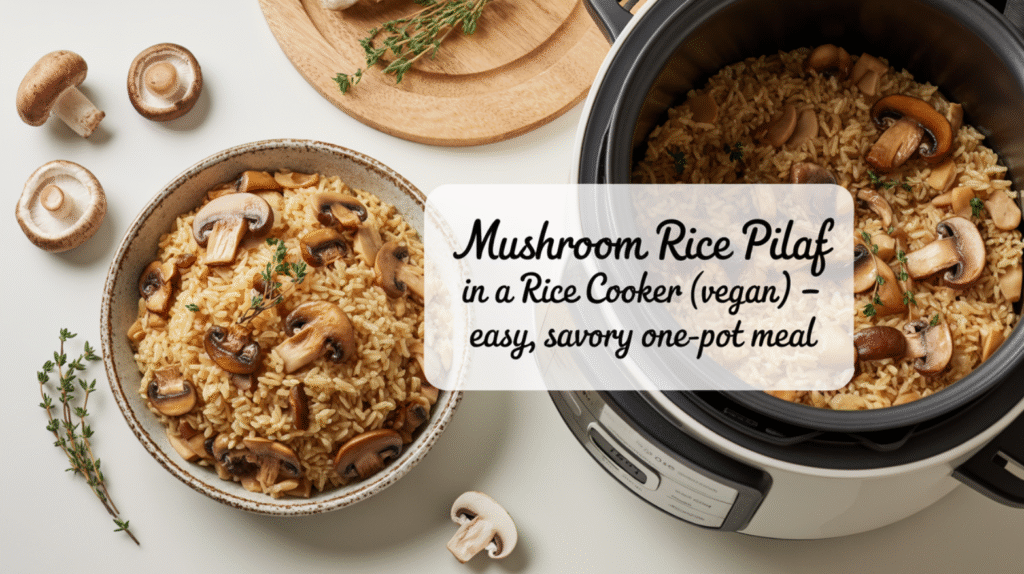
This guide walks you through the right rice type, liquid ratios, seasoning ideas, and step-by-step method so your vegan mushroom pilaf turns out reliably tender and flavorful every time.
Why Mushroom Pilaf Works So Well in a Rice Cooker
Rice cookers are designed to handle grains and liquid with precision, which makes them ideal for pilaf-style dishes that rely on absorption and gentle steaming. Mushrooms benefit from the enclosed, moist environment, releasing umami into the rice as it cooks. The same even, enclosed heat also helps other flavored rice dishes like vegan turmeric rice and vegan cilantro lime rice develop deep, consistent seasoning.
Love making easy rice cooker meals like this one? Explore our guide to the Best Rice Cookers for Healthy, Plant-Based & Everyday Meals.
How Mushrooms Enhance Rice During Cooking
Mushrooms soften and release their juices under gentle heat, turning a basic rice dish into something savory and satisfying.
- Their natural umami deepens the overall flavor of the pilaf
- Their moisture blends with the broth to season every grain of rice
Why Even Heat Matters for Pilaf Texture
Pilaf depends on individual grains that are tender but not mushy, and the rice cooker’s consistent temperature helps achieve that.
- Prevents hot spots that can cause burning or uneven cooking
- Allows rice to absorb broth gradually for a fluffy, separate-grain texture
Key Ingredients for Vegan Mushroom Rice Pilaf
A good pilaf balances rice, vegetables, broth, and seasonings. Each element contributes to flavor, texture, or aroma.
Base Ingredients
These ingredients create the foundation of the dish.
- Long-grain white rice (such as basmati or jasmine)
- Vegetable broth or stock
- Olive oil or another neutral plant-based oil
Mushroom and Aromatic Components
These add depth and savory character.
- Sliced mushrooms (button, cremini, or mixed)
- Chopped onion or shallot
- Minced garlic
Seasoning and Finishing Add-Ins
These bring the pilaf together with fragrance and freshness.
- Salt and black pepper
- Dried thyme, rosemary, or oregano
- Fresh parsley or chives for garnish
How to Make Vegan Mushroom Rice Pilaf in a Rice Cooker
The rice cooker lets you make a full pilaf in one pot with very little supervision. A few simple steps ensure the rice cooks evenly and the mushrooms stay tender.
Step 1: Rinse the Rice
Rinsing removes excess surface starch and helps the grains stay separate.
- Place the rice in a fine-mesh strainer
- Rinse under cool water until the water runs clearer
Step 2: Prepare the Mushrooms and Aromatics
Light preparation of vegetables improves both flavor and texture.
- Wipe or lightly rinse mushrooms and slice them evenly
- Finely chop onion or shallot and mince the garlic
Step 3: Lightly Sauté in the Rice Cooker (If Your Model Allows)
Many modern rice cookers have a “Sauté” or “Quick Cook” function, which lets you build flavor directly in the pot.
- Add a drizzle of olive oil and heat briefly
- Cook onion and garlic until fragrant, then stir in mushrooms until they begin to soften
If your rice cooker does not have this function, you can quickly sauté the aromatics in a pan on the stove and then transfer everything into the rice cooker.
Step 4: Add Rice, Broth, and Seasonings
At this stage, the rice cooker becomes a true one-pot solution.
- Add rinsed rice to the pot with the mushrooms and aromatics
- Pour in vegetable broth using roughly a 1:1.5–1:2 rice-to-liquid ratio (depending on your rice type and preference)
- Stir in salt, pepper, and dried herbs like thyme or rosemary
Step 5: Select the Cooking Mode
Use the standard “White Rice” or “Cook” setting for long-grain rice, unless your cooker has a dedicated “Pilaf” or “Mixed” setting.
- Allow the cooker to run through its full cycle
- Avoid lifting the lid during cooking so steam and moisture stay trapped
Step 6: Let the Pilaf Rest and Fluff
Resting helps the rice firm up slightly and absorb any remaining steam, which improves texture.
- Leave the pilaf on “Warm” with the lid closed for 5–10 minutes
- Fluff gently with a fork or rice paddle to separate the grains and distribute mushrooms evenly
Flavor Variations for Mushroom Rice Pilaf
Small changes in herbs, fats, or vegetables can give the pilaf new character while using the same basic method.
Herb and Garlic Variations
Adjusting the herb combination can shift the dish from rustic to more refined.
- Use a mix of thyme and rosemary for a classic, earthy flavor
- Add a little extra garlic for a stronger, bistro-style taste
Vegetable-Rich Variations
Additional vegetables make the pilaf heartier and more colorful.
- Stir in peas, carrots, or diced bell pepper before cooking
- Add a handful of spinach at the end and let residual heat wilt the leaves, similar to the way greens are used in spinach garlic rice cooker rice.
Common Mistakes to Avoid
Mushroom rice pilaf is simple, but avoiding a few pitfalls helps you get consistent results.
Using Too Much Liquid
Too much broth can make the pilaf soft or mushy instead of fluffy.
- Stick close to your rice cooker’s recommended ratio
- Add a small splash of hot broth at the end only if the rice seems too dry
Skipping the Rinse Step
Not rinsing rice can lead to clumping and a heavy texture.
- Rinse until water is mostly clear
- Drain well before adding to the pot so you do not unintentionally add extra liquid
Health Benefits of Vegan Mushroom Rice Pilaf
This dish offers comfort while still fitting into a balanced plant-based diet.
Plant-Based and Satisfying
Rice and mushrooms together create a filling base that pairs well with vegetables and legumes.
- Provides steady energy from complex carbohydrates
- Adds natural savory flavor without animal-based ingredients
Versatile for Balanced Plates
Mushroom pilaf supports different meal styles and nutrition goals.
- Can be served with roasted vegetables for a full vegan meal
- Works as a side alongside tofu, tempeh, or other plant-based proteins
Serving Suggestions
This pilaf can stand on its own or anchor a larger meal. Simple plating choices make it feel more complete.
As a Main Dish
Turn the pilaf into a centerpiece by pairing it with extra toppings or sides.
- Add a side salad with a light vinaigrette to balance the richness
- Top with toasted nuts or seeds for extra crunch and healthy fats
As a Side Dish
Serve smaller portions alongside other dishes for variety.
- Pair with grilled or roasted vegetables
- Serve next to a vegan protein like marinated tofu or lentil patties
Cleaning and Rice Cooker Care After Cooking Pilaf
Cooking with mushrooms and broth can leave a thin coating on the rice cooker pot, so a few quick steps help keep it in good condition.
Cleaning the Inner Pot
Proper cleaning preserves the non-stick surface and prevents lingering flavors.
- Allow the pot to cool slightly before filling it with warm, soapy water
- Use a soft sponge to loosen any rice or mushroom bits
Preventing Sticking in Future Batches
Small adjustments in preparation can make cleanup easier next time.
- Lightly oil the pot before adding ingredients if your rice tends to stick
- Avoid metal utensils that can scratch the surface and lead to more residue
FAQs
Here are some questions and answers about making mushroom rice pilaf in a rice cooker.
Can I use brown rice instead of white rice?
Yes, brown rice works well, but it requires more liquid and a longer cooking time. Follow your rice cooker’s instructions for brown rice ratios and expect a chewier texture with a more nutty taste.
Do I have to sauté the mushrooms first?
You do not have to, but sautéing deepens their flavor and improves the overall aroma of the pilaf. If your rice cooker cannot sauté, a quick stove-top sauté before transferring to the cooker is a helpful step.
Can I make this completely oil-free?
Yes. You can skip the oil and simply add mushrooms, aromatics, rice, and broth directly to the cooker. The flavor will be lighter, but vegetable broth and herbs will still produce a satisfying dish.
Can I add canned mushrooms instead of fresh?
Canned mushrooms can be used in a pinch, but fresh mushrooms provide better texture and flavor. If using canned, drain them well and add a bit more seasoning to compensate for their milder taste.
How long does leftover mushroom pilaf keep?
Leftovers typically keep well in the refrigerator for about three days when stored in an airtight container. Add a splash of water or broth when reheating to restore moisture and fluff the rice before serving.
If you’d like, next we can create a Quinoa and Mushroom Pilaf, a Rice Cooker Lentil Pilaf, or another savory vegan rice cooker main to expand this recipe cluster.