Ratatouille-style rice made in a rice cooker delivers the same comforting flavors of the classic French vegetable dish but in a simple, hands-off format. As the rice steams gently, vegetables like zucchini, bell peppers, tomatoes, and eggplant release their juices and blend into the grains, creating a fragrant, colorful, and naturally vegan bowl. This method lets you enjoy deep, home-cooked flavor without the labor of slow stovetop cooking.
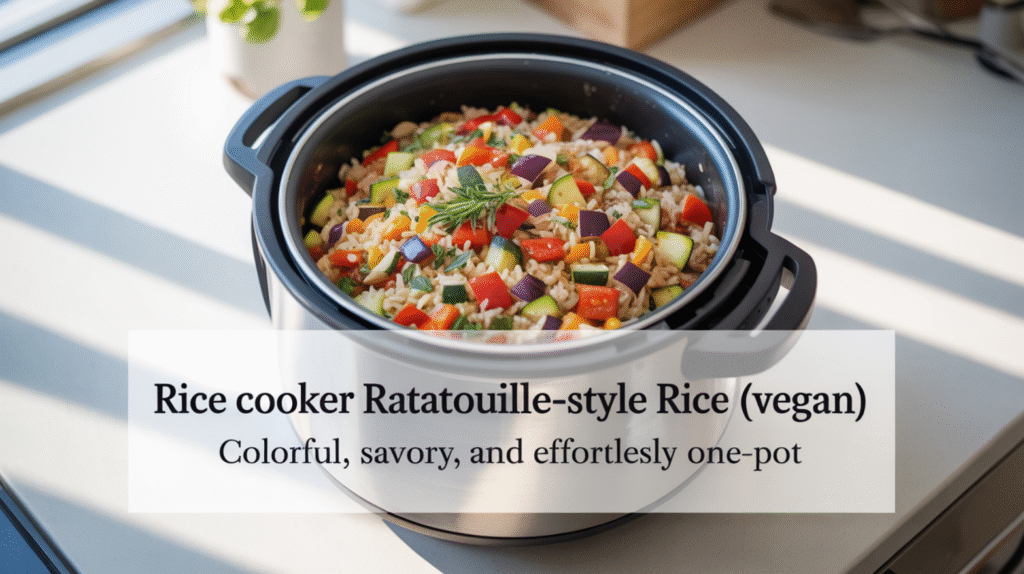
This recipe explains the ideal vegetable combinations, the right rice-to-liquid ratio, and the method that ensures every bite carries the warmth and richness of a good ratatouille—made easier with the help of your rice cooker.
Why Ratatouille-Style Rice Works Beautifully in a Rice Cooker
Ratatouille relies on slow cooking to break vegetables down into a soft, flavorful mixture, and the rice cooker mimics this gentle environment perfectly. The moist, enclosed heat softens the vegetables gradually and allows their flavors to seep into the rice without overcooking or drying out.
Love making easy rice cooker meals like this one? Explore our guide to the Best Rice Cookers for Healthy, Plant-Based & Everyday Meals.
How Steady Moist Heat Enhances Vegetable Flavor
The rice cooker captures steam and keeps ingredients surrounded by moisture. This helps vegetables release their juices slowly, which then get absorbed into the rice.
- Allows eggplant and zucchini to soften without becoming mushy
- Helps tomatoes act as a natural sauce base for the dish
Why the Rice Cooker’s Even Temperature Supports Perfect Texture
Vegetables cook at different speeds, but the steady, low heat of a rice cooker reduces the risk of burning or uneven doneness.
- Ensures bell peppers remain tender
- Lets rice stay fluffy while absorbing vegetable broth and juices
Essential Ingredients for Ratatouille-Style Rice
This dish uses the classic ratatouille elements, along with herbs and broth to give the rice depth and aroma.
Rice and Base Components
These ingredients form the main structure of the dish.
- Long-grain white rice (basmati, jasmine, or standard long-grain)
- Vegetable broth or stock
- Olive oil
Signature Ratatouille Vegetables
These vegetables provide the core flavor profile.
- Zucchini, sliced or diced
- Eggplant, cut into small cubes
- Bell peppers (any color), chopped
- Tomatoes or a few spoonfuls of crushed tomatoes
- Onion and garlic, finely chopped
Herbs and Seasoning
These elements create the aromatic Mediterranean character.
- Dried oregano or thyme
- Salt and black pepper
- A little crushed red pepper (optional)
- Fresh basil or parsley for serving
How to Make Vegan Ratatouille Rice in a Rice Cooker
The rice cooker simplifies the entire dish into one clean process. The key is to balance moisture, vegetables, and herbs so the rice absorbs flavor without turning soggy.
Step 1: Prepare and Cut the Vegetables
Even-sized cuts help the vegetables cook at the same pace.
- Dice zucchini and eggplant into small cubes
- Chop bell peppers and onions
- Mince garlic
If eggplant tends to be bitter, sprinkle salt on the cubes and let them sit for 10 minutes before rinsing.
Step 2: Lightly Sauté (Optional but Recommended)
If your rice cooker includes a sauté or “Quick Cook” mode, you can deepen the flavor directly in the pot.
- Sauté onion and garlic in a drizzle of olive oil until soft
- Add bell peppers, zucchini, and eggplant
- Stir until the vegetables begin to soften
If sautéing isn’t possible, simply add all vegetables raw—slow steaming will still bring great flavor.
Step 3: Add Rice, Tomatoes, and Seasonings
This step builds the foundation of ratatouille-style flavor.
- Add rinsed long-grain rice directly into the cooker
- Stir in chopped tomatoes or 2–3 tablespoons of crushed tomatoes
- Add vegetable broth using a 1:1.5–1:2 ratio depending on rice type
- Mix in oregano, thyme, salt, and pepper
Step 4: Start the Cooking Cycle
Use the standard “Cook,” “White Rice,” or “Mixed Rice” mode.
- Keep the lid closed for even steaming
- Avoid stirring during cooking so rice can absorb liquid properly
Step 5: Let the Rice Rest and Fluff
Resting helps the grains firm up and lets the vegetables settle evenly.
- Let the rice stand on “Warm” for 5–10 minutes
- Fluff gently with a fork or paddle to distribute vegetables
Flavor Variations for Ratatouille-Style Rice
Small additions can shift the dish from rustic to more vibrant or richer.
Mediterranean-Inspired Enhancements
These additions bring brightness and depth.
- Add olives or capers for a salty punch
- Stir in a splash of lemon juice before serving
Rich and Comforting Additions
These options make the dish heartier.
- Add a spoonful of tomato paste in Step 3 for deeper color and sweetness
- Mix in roasted garlic for more aroma
Common Mistakes to Avoid
Although the dish is forgiving, avoiding a few errors ensures a perfect texture.
Using Too Many Tomatoes
Too much tomato can make the rice overly wet.
- Use only a small amount of chopped or crushed tomatoes
- Add extra liquid only if needed
Cutting Vegetables Too Large
Large pieces may not soften completely in the rice cooker.
- Keep the vegetable cubes small
- Ensure even sizes for consistent cooking
Health Benefits of Ratatouille-Style Rice
This dish is naturally nutrient-rich and supports plant-based eating without effort.
Packed with Vegetables and Fiber
Each serving contains multiple servings of vegetables.
- Supports digestion
- Provides steady, plant-based energy
Naturally Vegan and Balanced
The combination of vegetables, herbs, and rice creates a nourishing one-pot meal.
- Contains antioxidants from tomatoes and peppers
- Offers complex carbohydrates for longer-lasting fullness
Serving Suggestions for a Complete Meal
Ratatouille-style rice is flexible and pairs well with many vegan sides or proteins.
As a Standalone Entrée
Enjoy it as a complete warm bowl.
- Serve with chopped fresh basil
- Add a drizzle of extra-virgin olive oil
As a Side Dish
It works well alongside other Mediterranean or plant-based dishes.
- Pair with grilled vegetables
- Serve with tofu cutlets or chickpea patties
Cleaning Tips After Cooking Ratatouille Rice
Tomatoes and vegetables can leave traces of color or residue, so quick cleaning helps maintain your rice cooker.
Cleaning the Pot Properly
Handle the rice cooker’s inner pot gently to preserve its surface.
- Rinse with warm water while the pot is still warm
- Use a soft sponge with mild soap
Preventing Sticking in the Future
A little preparation prevents residue buildup.
- Lightly oil the pot before adding ingredients
- Avoid metal utensils that can scratch the surface
FAQs
Here are some questions and answers about making ratatouille-style rice in a rice cooker.
Can I use brown rice instead of white rice?
Yes, but it requires more liquid and a longer cook time. Follow your rice cooker’s brown rice ratio and expect a firmer texture.
Do I have to sauté the vegetables first?
No. Sautéing improves flavor, but raw vegetables will still soften well during steaming.
Can I make this dish oil-free?
Absolutely. Use vegetable broth and skip the oil. The rice will still absorb flavor from the vegetables and herbs.
Will eggplant become mushy in the rice cooker?
If cut small, eggplant becomes tender but not mushy. The steady heat helps it break down gradually and blend into the rice.
How long do leftovers last?
The dish stores well for two to three days in the refrigerator. Reheat with a splash of broth or water to restore moisture.