
Vegan kimchi fried rice made in a rice cooker delivers the same spicy, savory depth as the traditional skillet version, but with far less effort. The rice cooker handles the heat evenly, allowing kimchi juices to soak into the rice while aromatics gently cook together. If you enjoy this kind of cozy, flavor-packed bowl, you might also like our rice cooker Japanese curry rice, which uses a similar hands-off method. The result is a deeply seasoned, comforting dish with layered flavor and a satisfying texture—no constant stirring required.
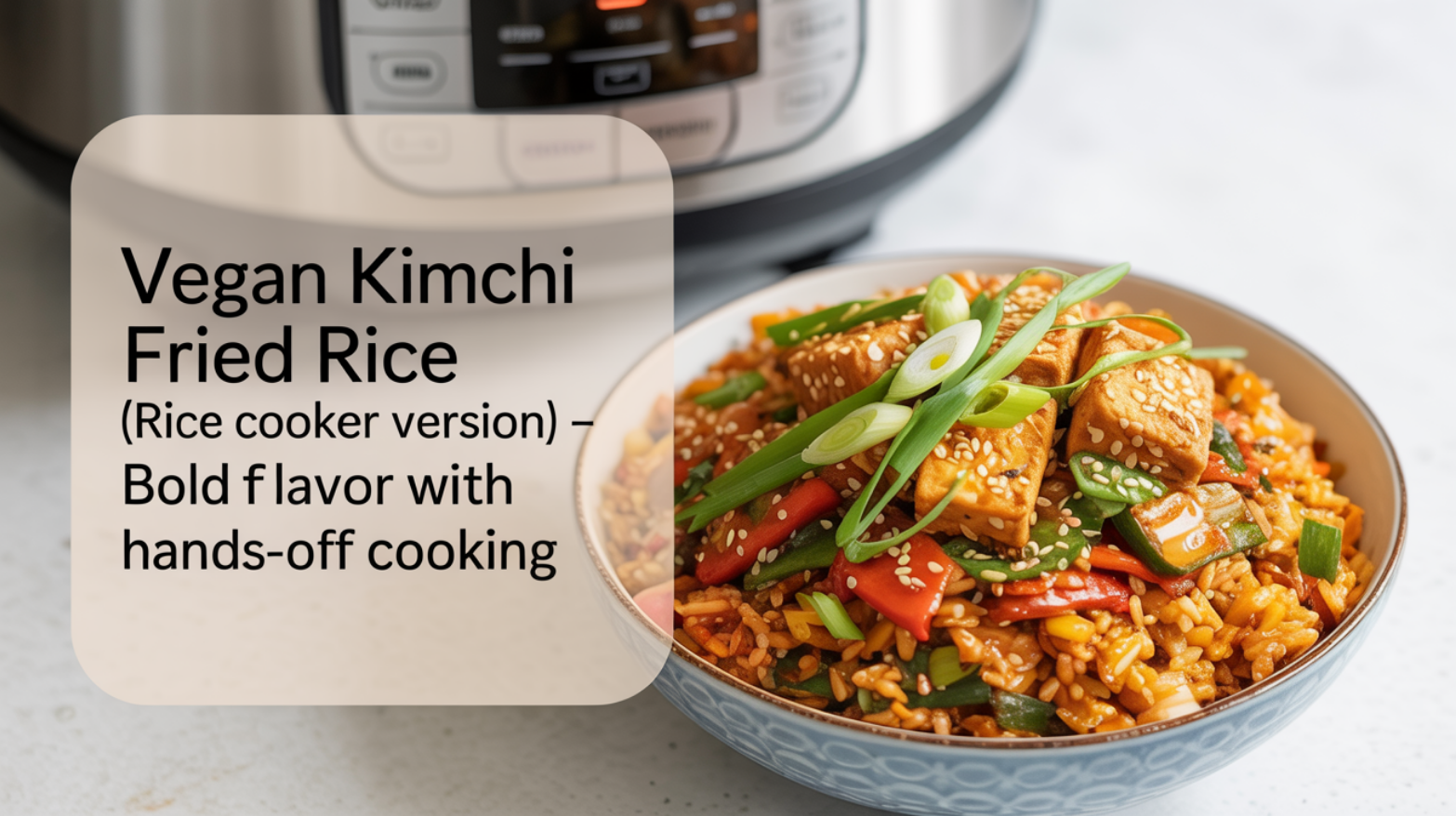
This rice cooker version is ideal when you want strong, fermented flavor without standing over the stove, and it works equally well as a main dish or a hearty side. It fits right in with other one-pot vegan recipes like our rice cooker tofu rice bowl or vegan Thai green curry rice.
Why Kimchi Fried Rice Works Surprisingly Well in a Rice Cooker
Although fried rice is usually cooked quickly over high heat, the rice cooker creates a different—but equally effective—outcome. The same gentle, steady heat that makes dishes like rice cooker miso mushroom rice so comforting also works beautifully with kimchi.
Love making easy rice cooker meals like this one? Explore our guide to the Best Rice Cookers for Healthy, Plant-Based & Everyday Meals.
Controlled Heat Builds Flavor Gradually
Instead of rapid browning, the cooker allows time for infusion.
- Kimchi juices spread evenly through the rice
- Garlic and onion soften without burning
Rice Absorbs Seasoning More Evenly
Steady heat helps flavors penetrate each grain.
- No dry or bland pockets
- Consistent seasoning throughout the dish
Ingredients for Vegan Kimchi Fried Rice
This recipe relies on bold ingredients, but each one has a specific role. You can use leftovers from other rice cooker meals—such as rice from our vegan sushi rice or creamy vegan mushroom risotto—as long as the grains are cooled and not overly saucy.
Core Ingredients
These form the base of the dish.
- Cooked white rice (preferably day-old)
- Vegan kimchi (finely chopped)
Flavor Builders
These create depth and balance.
- Garlic and onion
- Soy sauce or tamari
Optional Add-Ins
These add texture, color, or protein.
- Green peas, corn, or scallions
- Firm tofu or edamame
Choosing the Right Kimchi for Vegan Fried Rice
Not all kimchi is vegan, and not all works equally well for cooking.
Use Vegan-Certified Kimchi
Traditional kimchi often contains fish sauce or shrimp paste.
- Check labels carefully
- Look for versions fermented with soy sauce or miso
Well-Fermented Kimchi Is Best
Older kimchi cooks better than fresh.
- More acidic and complex
- Breaks down easily during cooking
How to Make Vegan Kimchi Fried Rice in a Rice Cooker
This method focuses on layering and timing rather than stirring. It’s a similar approach to other “set it and let it absorb” recipes like our rice cooker tofu teriyaki rice, where the seasoning works its way into each grain.
Step 1: Prepare the Rice
Cold rice works best.
- Use rice cooked earlier and refrigerated
- Break up clumps before adding to the cooker
Step 2: Sauté Aromatics Briefly (Optional)
Some rice cookers allow light sautéing.
- Use a teaspoon of oil
- Cook onion and garlic until fragrant
If your cooker lacks this function, add aromatics directly to the rice.
Step 3: Add Kimchi and Seasoning
Layer ingredients evenly.
- Spread kimchi over the rice
- Add soy sauce and kimchi juice lightly
Step 4: Select the Cooking Setting
Use the standard “Cook” or “Rice” mode.
- Allows moisture to redistribute
- Helps rice reheat and absorb flavor
Step 5: Rest and Fold Gently
Let the rice sit once cooking finishes.
- Rest for 5 minutes
- Fold gently to prevent mushy texture
Getting the “Fried Rice” Feel Without a Pan
Although there’s no high-heat stir-frying, texture still matters.
Control Moisture Carefully
Too much liquid prevents proper separation.
- Use only a small amount of kimchi juice
- Avoid adding water unless rice is very dry
Use Oil Sparingly
A small amount enhances mouthfeel.
- Helps coat the grains
- Prevents sticking
Flavor Variations to Try
This dish adapts well to different preferences and pairs nicely with other rice cooker favorites like vegan veggie jambalaya for a mixed table of spicy, saucy options.
Mild and Balanced Version
Soften the heat while keeping umami.
- Use less kimchi
- Add a touch of sesame oil
Extra-Spicy and Bold
Lean into traditional flavor.
- Add gochugaru (Korean chili flakes)
- Stir in chili oil after cooking
Protein-Forward Bowls
Turn it into a full meal.
- Add cubed baked tofu
- Mix in edamame or chickpeas
Common Mistakes to Avoid
Small missteps can affect texture or balance.
Using Freshly Cooked Rice
Hot rice turns mushy easily.
- Always cool rice first
- Day-old rice holds structure better
Overmixing During Cooking
Stirring too much releases starch.
- Mix only after cooking
- Fold gently, not aggressively
Serving Ideas for Vegan Kimchi Fried Rice
This dish works across meals and occasions. It also pairs well with lighter rice cooker recipes such as vegan sticky rice with mango if you want a spicy main and a sweet, soothing dessert from the same appliance.
Simple Bowl Presentation
Serve warm and minimal.
- Garnish with scallions or sesame seeds
- Add nori strips for extra umami
Complete Meal Bowls
Build around the rice.
- Pair with steamed greens
- Add pickled vegetables for contrast
Storage and Reheating Tips
Kimchi rice stores well when handled correctly.
Refrigeration
Let rice cool completely first.
- Store in airtight containers
- Keeps for up to three days
Reheating
Restore texture carefully.
- Reheat in a pan or microwave
- Add a teaspoon of water or oil if dry
Health Benefits of Vegan Kimchi Fried Rice
This dish offers more than bold flavor.
Fermented Foods Support Digestion
Kimchi contains beneficial compounds.
- Adds depth without heavy fats
- Supports gut-friendly eating patterns
Plant-Based and Satisfying
Rice and vegetables provide steady energy.
- Naturally cholesterol-free
- Filling without being overly heavy
FAQs
Here are some questions and answers about making vegan kimchi fried rice in a rice cooker:
Can I make this recipe without oil?
Yes, but the texture will be slightly drier. A small amount of oil helps mimic traditional fried rice mouthfeel.
Does kimchi lose its probiotics when cooked?
Heat reduces live cultures, but flavor compounds remain. The dish still benefits from fermented depth.
Can I use brown rice instead of white rice?
Yes, though the texture will be chewier. Make sure the rice is fully cooked and cooled before use.
Is sugar needed to balance acidity?
Usually not. Well-fermented kimchi provides balanced tang, but a pinch of sugar can soften sharpness if needed.
Can this be made less spicy?
Absolutely. Reduce kimchi quantity and rinse it briefly before chopping to lower heat.