
Vegan sticky rice with mango is a classic Thai dessert that combines tender glutinous rice with rich coconut milk and fresh mango. When prepared thoughtfully, the rice turns soft and glossy while absorbing gentle coconut sweetness, creating a contrast with the juicy, aromatic mango slices. If you enjoy Asian-inspired rice dishes, you might also like our vegan sushi rice in a rice cooker, which uses many of the same techniques for seasoning and texture. This plant-based version keeps the traditional character of the dessert while remaining simple and approachable to make at home.
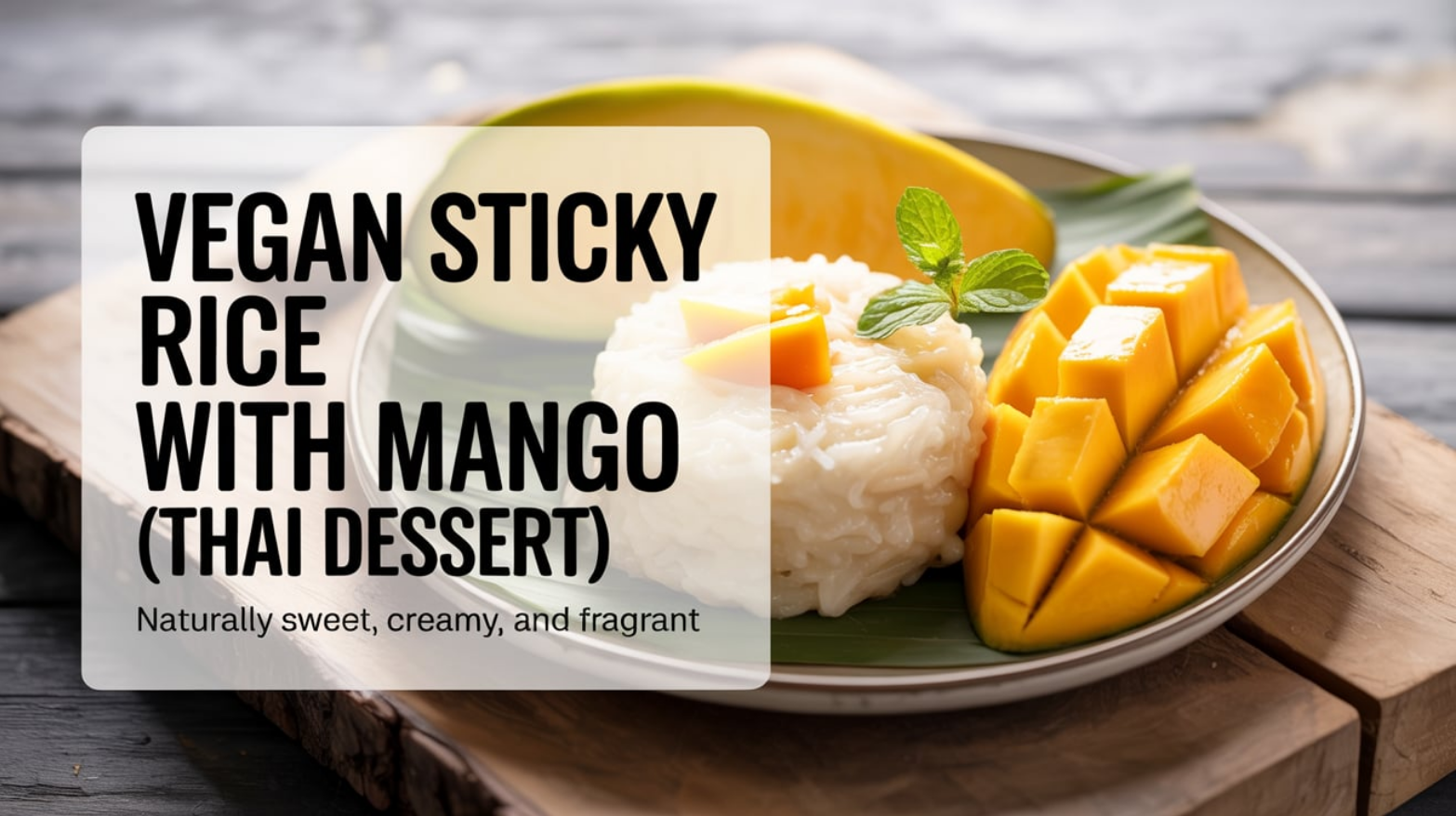
The dish works beautifully as a light dessert or a comforting sweet meal, especially in warm weather when ripe mangoes are at their best, and it pairs nicely after savory rice cooker meals like vegan Thai green curry rice.
Why Sticky Rice with Mango Works So Well as a Vegan Dessert
This dessert relies on texture and natural sweetness rather than dairy or refined ingredients, similar to how dishes like rice cooker Japanese curry rice focus on balance and mouthfeel instead of heavy sauces.
Love making easy rice cooker meals like this one? Explore our guide to the Best Rice Cookers for Healthy, Plant-Based & Everyday Meals.
Coconut Milk Creates Creaminess
Coconut milk replaces dairy effortlessly.
- Adds richness without heaviness
- Coats the rice grains smoothly
Mango Adds Natural Sweetness and Aroma
Ripe mango balances the creamy rice.
- Provides freshness and contrast
- Brings floral, tropical notes
Ingredients for Vegan Sticky Rice with Mango
Each ingredient plays a precise role in achieving the right balance.
Core Ingredients
These form the base of the dessert.
- Glutinous (sweet) rice
- Full-fat coconut milk
Sweetening and Flavor
These enhance depth without overpowering.
- Cane sugar or coconut sugar
- Salt (small amount to balance sweetness)
Fruit Component
This completes the dish.
- Ripe mangoes, peeled and sliced
Understanding Sticky Rice for Thai Desserts
Sticky rice behaves differently from regular rice, which is key to the dish’s texture. The way it absorbs liquid and holds together is also what makes recipes like rice cooker miso mushroom rice and creamy vegan mushroom risotto so satisfying and cohesive.
What Makes Sticky Rice Unique
It contains almost no amylose.
- Becomes glossy when cooked
- Clumps gently without becoming mushy
Why Rinsing and Soaking Matter
Preparation affects texture significantly.
- Removes surface starch
- Helps rice cook evenly
How to Make Vegan Sticky Rice with Mango
The method focuses on careful cooking and proper absorption of coconut sauce. Once you understand these steps, you can apply similar timing and resting techniques to savory rice cooker meals such as rice cooker tofu teriyaki rice.
Step 1: Rinse and Soak the Rice
Soaking softens the grains.
- Rinse until water runs clear
- Soak for at least 4 hours or overnight
Step 2: Cook the Sticky Rice
Steam or gently cook until tender.
- Rice should be soft but intact
- No excess water should remain
Step 3: Prepare the Coconut Sauce
Heat coconut milk gently with sugar and salt.
- Stir until sugar dissolves
- Do not boil aggressively
Step 4: Combine Rice and Coconut Sauce
Allow rice to absorb flavor gradually.
- Pour sauce over warm rice
- Cover and rest for 10 minutes
Step 5: Slice Mango and Assemble
Assembly should happen just before serving.
- Arrange mango beside sticky rice
- Spoon extra coconut sauce on top
Tips for the Best Texture and Flavor
Small details make a big difference with this dessert.
Choose the Right Coconut Milk
Thickness matters.
- Use full-fat coconut milk
- Avoid overly diluted versions
Let the Rice Rest
Resting improves absorption.
- Enhances creaminess
- Prevents separation
Common Mistakes to Avoid
Avoiding these helps preserve the dish’s character.
Using Regular Rice Instead of Sticky Rice
Texture will not be the same.
- Jasmine or basmati won’t clump correctly
- Dish loses its signature feel
Overheating Coconut Milk
High heat affects flavor.
- Can cause separation
- Dulls natural sweetness
Serving Ideas for Vegan Sticky Rice with Mango
Presentation enhances the eating experience, and this dessert also makes a beautiful finish after hearty one-pot meals such as rice cooker ratatouille-style rice or a simple rice cooker tofu rice bowl.
Traditional Thai-Style Serving
Keep it simple and balanced.
- Rice shaped neatly
- Mango fanned alongside
Modern Variations
Small changes create new experiences.
- Add toasted sesame seeds
- Garnish with coconut flakes
Storing and Make-Ahead Tips
This dessert is best fresh but can be planned ahead.
Short-Term Storage
Store components separately.
- Rice and coconut sauce refrigerated
- Mango added just before serving
Reheating Sticky Rice
Warm gently.
- Steam lightly or microwave briefly
- Add a spoon of coconut milk if needed
Health and Nutritional Context
While indulgent, the ingredients remain straightforward. If you plan to make this dessert regularly, it may also be worth checking our guide to the best rice cookers so you can choose a model that handles both sticky rice and everyday meals reliably.
Naturally Plant-Based and Dairy-Free
Coconut milk provides richness.
- No dairy required
- Suitable for vegan diets
Energy-Rich but Balanced
Rice and fruit offer natural fuel.
- Quick energy from carbohydrates
- Minimal processing
FAQs
Here are some questions and answers about vegan sticky rice with mango:
Can I make this dessert without soaking the rice?
Soaking is strongly recommended. It ensures even cooking and prevents the rice from becoming dense.
Is coconut sugar better than white sugar?
Both work well. Coconut sugar adds a slightly caramel-like note, while white sugar keeps the flavor lighter.
Can I use light coconut milk?
Light coconut milk reduces creaminess. Full-fat coconut milk delivers the traditional texture and richness.
What type of mango works best?
Ataulfo or other ripe, non-fibrous mangoes are ideal. They are sweeter and blend well with coconut flavors.
Can sticky rice with mango be frozen?
Freezing is not recommended. The rice texture changes significantly once thawed.