
Vegan sushi rice becomes incredibly reliable when made in a rice cooker. The consistent heat and even steam absorption help the grains turn sticky, glossy, and lightly seasoned, exactly what you need for plant-based sushi rolls, poke bowls, and rice-based lunches. If you enjoy this kind of simple base for bowls, you might also like our rice cooker tofu rice bowl, which uses similar rice cooker logic for a full meal. Instead of watching a pot on the stove, the rice cooker handles the whole process and delivers the soft, clinging texture that sushi rice is known for.
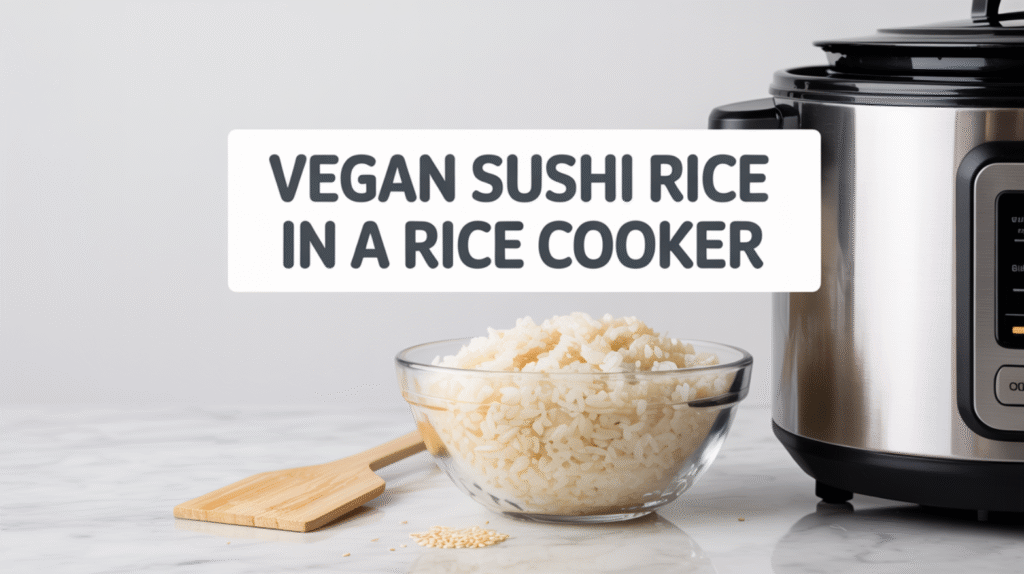
This recipe keeps the flavor traditional by using a simple blend of rice vinegar, sugar, and salt. Everything else is purely optional, which makes it ideal for both beginners and experienced sushi lovers, especially if you already enjoy other rice-based dishes like our vegan Spanish rice with black beans.
Why Sushi Rice Works Well in a Rice Cooker
Rice cookers create the precise conditions sushi rice needs to become sticky without turning mushy. The same gentle, even heat that works for creamy dishes like creamy vegan mushroom risotto also keeps sushi rice tender from edge to center.
Love making easy rice cooker meals like this one? Explore our guide to the Best Rice Cookers for Healthy, Plant-Based & Everyday Meals.
Even Moisture Absorption
The cooker keeps steam inside the pot.
- Helps each grain become tender
- Prevents uneven cooking or hard centers
Perfect Texture for Vegan Sushi
Sushi rice must hold its shape when rolled while still feeling soft and cohesive. This same balance of stickiness and structure is what makes recipes like our vegan veggie jambalaya work so well in a rice cooker too.
- Rice becomes sticky but not wet
- Grains cling together naturally
Ingredients for Vegan Sushi Rice
Sushi rice has a short ingredient list, but each part plays a specific role in the final texture.
Base Ingredients
These elements create the structure of sushi rice.
- Short-grain Japanese rice
- Water measured exactly
Vegan Seasoning Mixture
This is added after cooking to bring the classic sushi flavor.
- Rice vinegar
- Sugar
- Salt
Optional Add-Ins for Extra Flavor
These can adjust sweetness or tang.
- A touch of mirin
- A small piece of kombu (remove after cooking)
How to Cook Vegan Sushi Rice in a Rice Cooker
The method is simple but benefits from attention to the early steps. The same careful rinsing and measuring also apply in other rice cooker recipes like our vegan lentil curry, where texture depends on the right liquid balance.
Step 1: Rinse the Rice Thoroughly
Rinsing removes excess starch.
- Rinse until water runs almost clear
- Drain well to avoid extra moisture
Step 2: Measure Water Precisely
Sushi rice needs slightly less water than long-grain rice.
- Use your rice cooker’s markings
- If unsure, use a 1:1 ratio (rice to water)
Step 3: Optional – Add Kombu for Umami
A small piece of kombu deepens flavor naturally.
- Place it on top of the rice
- Remove after cooking
Step 4: Cook on the White Rice Setting
A straightforward setting works well.
- Avoid stirring while cooking
- Let the cycle finish completely
Step 5: Prepare the Seasoning
Dissolve sugar and salt in the vinegar.
- Warm the mixture briefly to help dissolve
- Do not boil
Step 6: Fold the Seasoning Into the Rice
The key is to fold, not mash.
- Spread rice in a large bowl
- Gently fold with a wooden spoon
- Allow it to cool until slightly warm
Tips for Getting Perfect Vegan Sushi Rice
Small adjustments help control stickiness and flavor.
Use the Right Rice
Only short-grain Japanese rice gives true sushi texture.
- Avoid basmati or jasmine
- Check packaging for “sushi rice”
Cool the Rice to the Right Temperature
Rice should be warm, not hot, when rolling.
- Prevents nori from softening too quickly
- Helps rice bond naturally
Serving Ideas for Vegan Sushi Rice
You can use this rice in many plant-based meals, from simple rolls to more complex rice bowls. It also pairs nicely with bolder mains like our vegan rice cooker chili or rice cooker chickpea stew if you want a mix of textures on the table.
Sushi Rolls
Classic and customizable.
- Fill with cucumber, avocado, tofu, or carrot
- Roll tightly with a bamboo mat
Plant-Based Bowls
Makes easy lunches or meal prep dishes.
- Add edamame, seaweed salad, or roasted vegetables
- Drizzle with soy sauce or sesame dressing
Common Mistakes to Avoid
These are simple but affect texture noticeably.
Using Too Much Water
Leads to sticky mush instead of firm stickiness.
- Stick to the 1:1 ratio
- Drain rinsed rice thoroughly
Over-Mixing the Rice
Can crush the grains.
- Fold gently
- Avoid pressing or stirring quickly
Health Benefits of Vegan Sushi Rice
Sushi rice offers a neutral carb base that supports balanced meals.
Easily Digestible
Gentle on the stomach.
- Works well with vegetables and tofu
- Provides steady energy
Naturally Vegan
No dairy or animal products involved.
- Seasoning is plant-based
- Pairs seamlessly with vegan fillings
FAQs
Here are some questions and answers about vegan sushi rice:
Can I use brown rice for sushi?
You can, but the texture won’t be as sticky. Brown rice stays firmer and does not roll as neatly as short-grain white rice.
Why is my sushi rice too wet?
Excess water or under-rinsing is usually the reason. Reduce water slightly and rinse the rice thoroughly before cooking.
Can I make sushi rice ahead of time?
Yes, but it is best used within a few hours. Store lightly covered at room temperature; refrigeration makes it too firm.
Should I fan the rice after mixing the vinegar?
Fanning helps excess moisture evaporate and gives the grains a glossy finish, but it’s optional for home cooking.